
Normalize the quotation scope
Ask for the exact code, form, declared active basis, quantity, currency, named destination, delivery term and quotation validity. Keep freight, unloading and optional technical services explicit so competing prices cover the same responsibility boundary.
Do not assume powder dry matter or emulsion nonvolatile content equals active polymer. Confirm how the supplier defines the property. Compare actual as-supplied consumption as well as any normalized active figure.
Use dry-solids throughput correctly
Calculate commercial product kilograms per dry-solids tonne from synchronized feed, solids and chemical measurements. If consumption is already on a commercial-product basis, do not divide by active fraction again.
The dry-tonne calculation distinguishes product mass from solution volume. Multiplying a calibrated commercial dose by delivered price gives chemical cost per dry tonne; it does not yet include disposal or equipment effects.
Compare accepted performance, not the driest sample
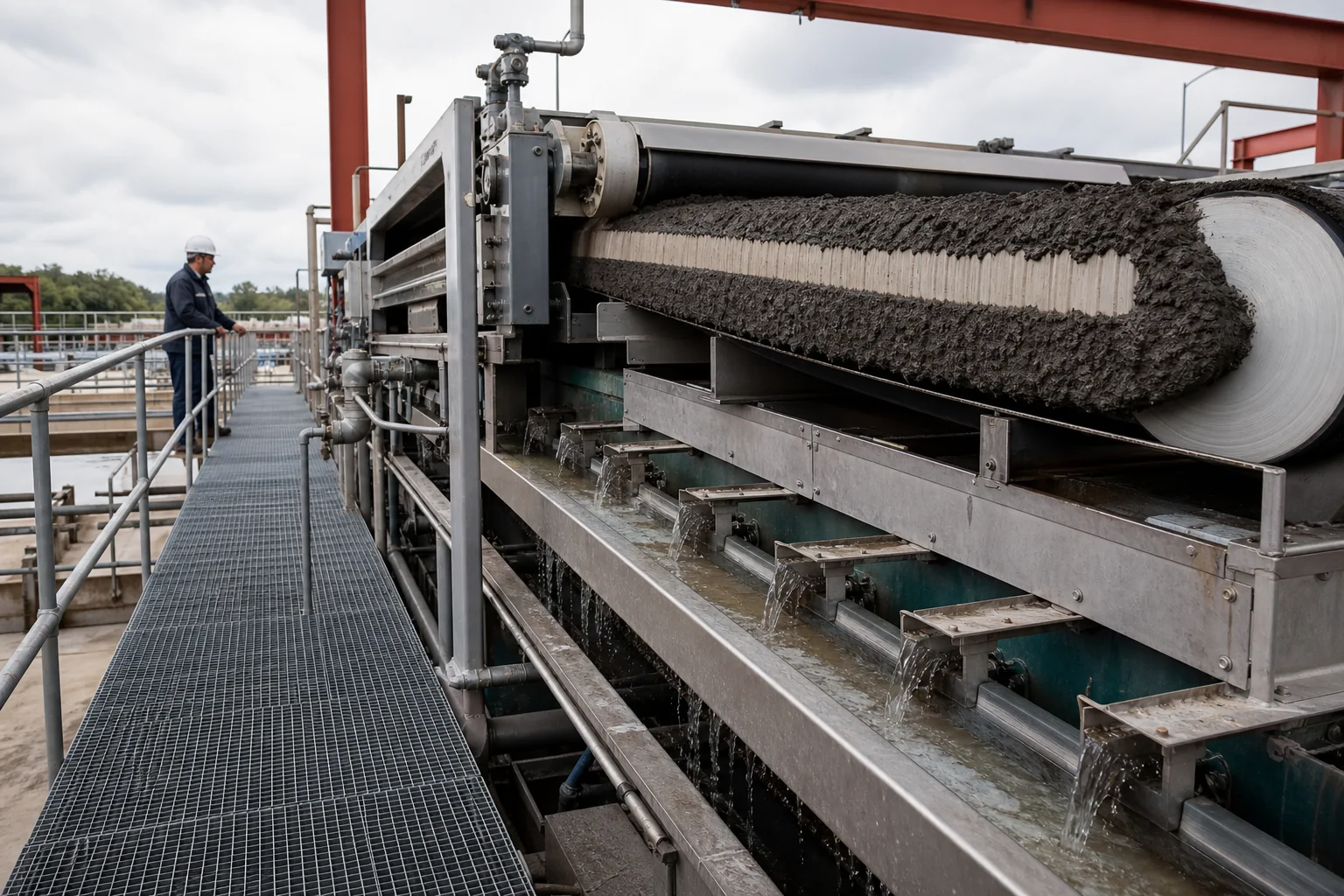
Pair cake dry solids with filtrate or centrate solids and throughput. A drier cake can conceal poorer capture, shifting solids back into the treatment plant. Set the acceptable liquid-stream condition before comparing products.
Use repeated representative runs, including a difficult feed period where appropriate. Keep the incumbent in the comparison and report uncertainty when the apparent improvement is smaller than sampling or analytical variation.
Estimate disposal impact from measured mass
At a fixed mass of dry solids captured, wet cake mass equals captured dry-solids mass divided by cake dry-solids fraction. Use fractions, not percentage numbers, and keep captured mass consistent between alternatives.
Apply the plant's actual haulage and disposal charging basis. If capture changes, or charges depend on volume and handling rather than mass alone, adjust the comparison instead of claiming every increase in cake solids produces the same saving.
Close the commercial decision
Add preparation water, operator work, maintenance, cleaning and inventory only where changes were measured or explicitly costed. Separate one-time equipment conversion from repeat operating cost.
Send the baseline and accepted endpoints with the CPAM price enquiry. Keep code, dose basis, feed envelope and release checks in the purchasing file so a cheaper repeat shipment cannot silently substitute an unqualified grade.
A cake-transport comparison with a fixed captured mass
For arithmetic illustration only, one tonne of captured dry solids produces five tonnes of wet cake at 20% cake dry solids, or about 3.33 tonnes at 30%. The difference is about 1.67 wet tonnes. These hypothetical values are not achievable CPAM performance claims.
Apply the actual disposal tariff to the relevant measured mass or volume, then subtract any extra chemical and preparation cost. If the second condition captures less dry material, first correct the mass balance. Keep feed solids, returned solids and cake sampling synchronized; otherwise the attractive disposal figure may compare different quantities of captured material.