
Specify the preparation duty first
Record hourly product demand, operating shifts, water temperature, feeder range and tank working volume. Distinguish time spent wetting particles from time needed to develop a consistent hydrated solution. A feeder that can deliver the required mass does not prove that the make-down system can finish preparing it.
Discuss product particle form and application-specific instructions with the supplier. Wetting behavior and stock viscosity should be checked with the actual preparation equipment, especially when a plant changes supplier or increases throughput.
Approve against solids capture and handling
Use controlled stock to compare the candidate on representative sludge or suspended matter. Record dose on a stated active or commercial-product basis. Keep the product code tied to preparation age, mixing and the measured separator result.
For dewatering, useful observations include drainage, filtrate or centrate quality, cake solids and release. Large visible floc alone cannot establish the product’s value. The sludge-dewatering route sets out the full process check.
Protect continuity between bags and batches
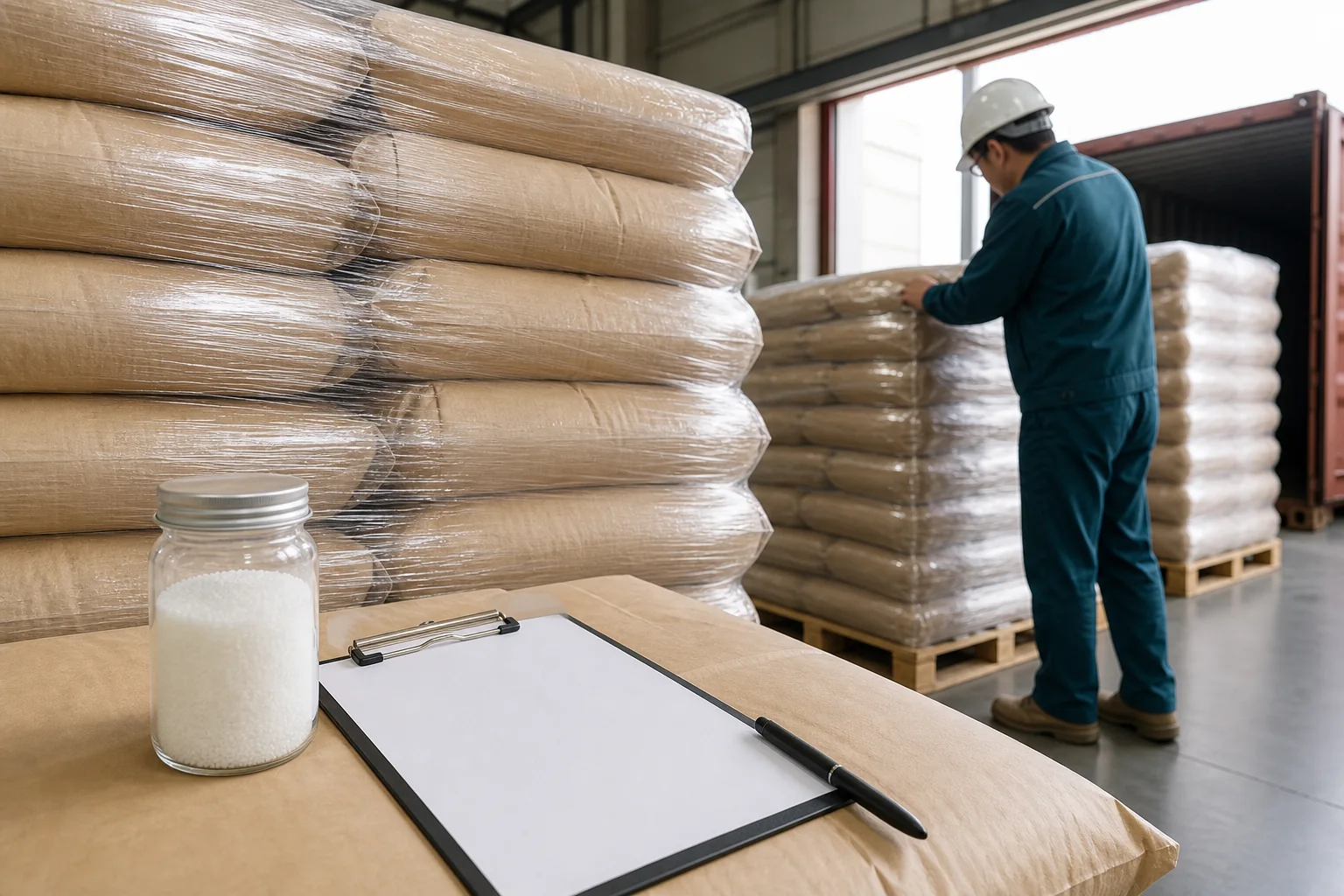
Request packaging details, storage instructions, lot identification, SDS and the release specification. Check bag condition and batch details at receipt. Keep an approved sample for comparison if the operating response later changes.
When usable solution is inconsistent, investigate the preparation and aging record before changing the dry polymer dose.
Purchasing records for this duty
- CPAM Powder for Existing Feeders: Specify Particle Distribution — Buy cationic polyacrylamide powder against actual feeder output, wetting, hydration and handling instead of a nominal mesh label.
- CPAM for Cold Preparation Water: Check Usable Stock Capacity — Qualify cationic polymer supply for winter preparation using product instructions, maturation, working volume, viscosity and peak process demand.