
Do not equate liquid form with ready-to-dose polymer
An emulsion must be prepared according to its supplied instructions so the active polymer becomes available in water. Water quality, dilution sequence, contact and maturation can influence the result. Confirm the exact activation arrangement and compatibility before starting a trial.
Document active fraction and density separately. Active fraction converts commercial mass to polymer mass; density converts liquid volume to commercial mass. Confusing those two properties creates incorrect comparisons with powder.
Compare the conversion as a system change
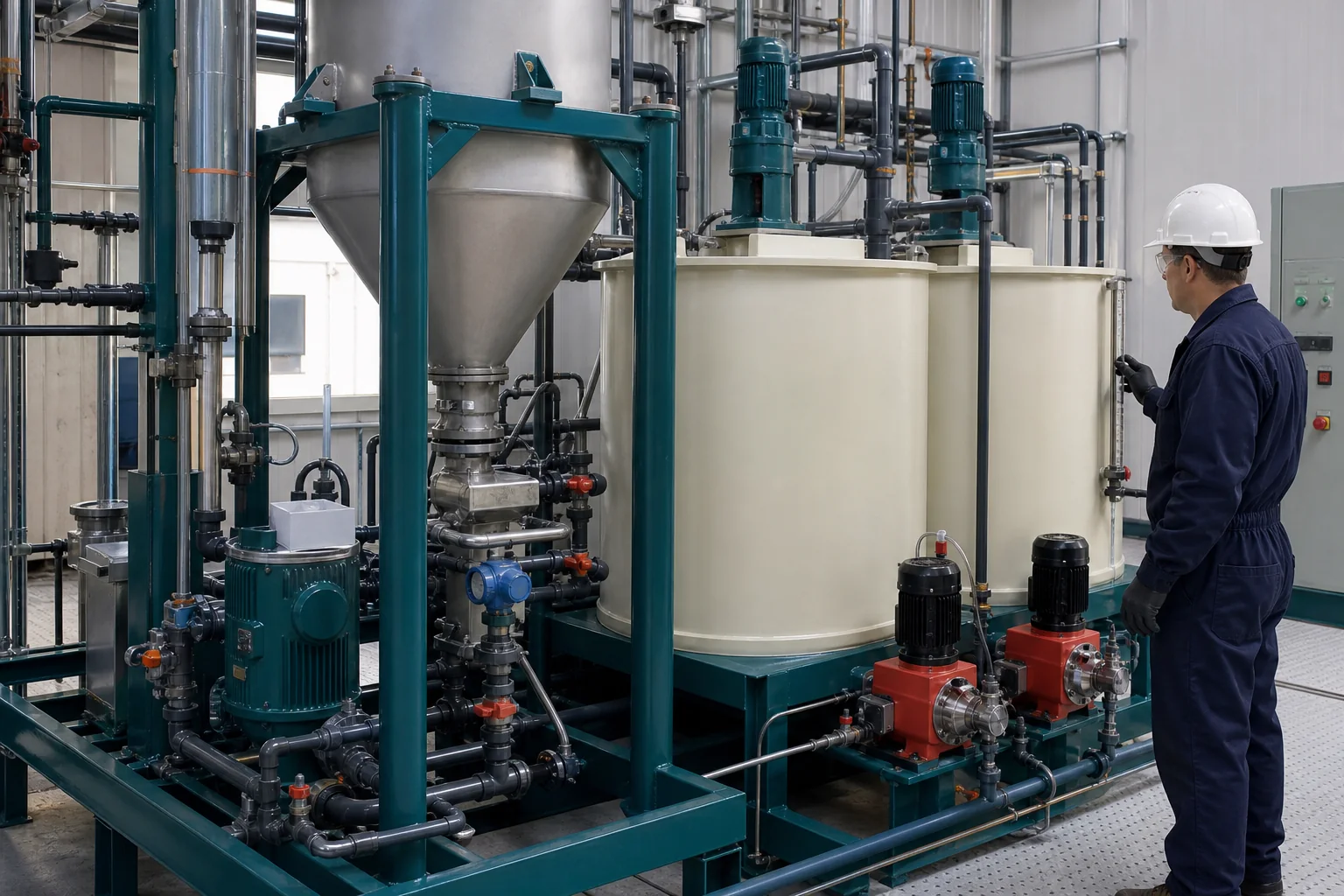
Inspect storage, transfer pumps, metering range, preparation equipment and cleaning requirements. Ask for the product-specific SDS, temperature guidance and handling instructions. Do not infer a universal shelf life or storage range from the word emulsion.
Test the current product and the proposed replacement on the same feed sample. Use each product’s appropriate preparation method, then compare on a common stated mass basis and the same separator endpoint. The powder-to-emulsion conversion plan gives a practical sequence.
Keep the order tied to the successful sample
Record product code, batch, activation conditions and the operating window alongside the quotation. Confirm package size, destination and expected usage with Xinqi technical sales. A lower metering volume is not evidence of lower treatment cost.
More liquid-product operating context is available in the Xinqi cationic emulsion resource.
Purchasing records for this duty
- CPAM Emulsion in IBCs: Compare Active Content and Density — Specify cationic polymer emulsion quotes with code, active basis, density, activation requirements, IBC handling and delivered treatment cost.