
Understand what the number does not say
A charge specification does not fully describe chain size, branching, active content, solution behavior or the method used to report the value. Two products with similar advertised cationicity may behave differently after preparation or under shear.
Ask suppliers to explain the difference between proposed samples using aligned methods. Begin with a small set and a written reason for including each candidate. Avoid changing charge, product form and the preparation process simultaneously unless the comparison explicitly accounts for all three.
Recognize changes in the material being treated
Biological sludge, digestion, industrial organics and upstream coagulants can affect conditioning behavior. Record feed composition and age, solids, pH, conductivity and recent process changes. An old approved sample record may not represent the current feed.
The digested-sludge selection note explains how to build a charge trial without turning one laboratory outcome into a universal grade rule.
Set a process-based acceptance band
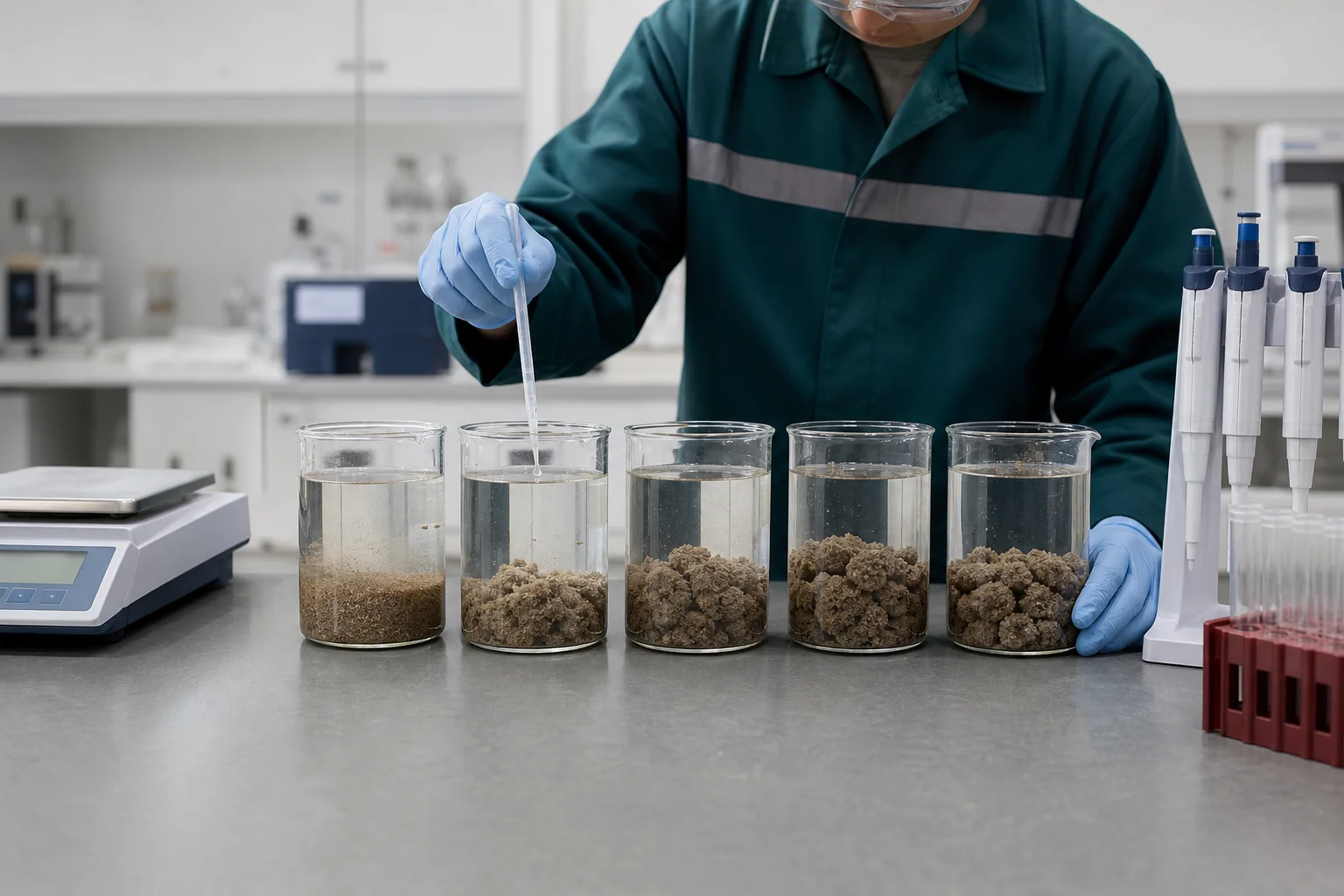
Screen several doses, including insufficient and excessive treatment, while holding mixing and sample handling constant. Repeat finalists. Measure capture and dewatering or flotation performance rather than judging by the apparent size of the largest floc.
If every candidate performs poorly, check sample quality and preparation before requesting progressively higher charge. A failed stock solution or unstable upstream chemistry cannot be diagnosed from the bag label.
Purchasing records for this duty
- High-Charge Cationic Polyacrylamide: Purchase Specification — Qualify high-charge CPAM offers with comparable charge methods, defined sludge, controlled preparation and equipment-specific acceptance.
- CPAM Molecular Weight and Viscosity: Compare Supplier Quotes — Align cationic polymer molecular and viscosity descriptions with stated test conditions, preparation capacity and measured separator response.
- CPAM After Ferric Conditioning: Qualify the Sludge Before Buying — Specify cationic polymer trials after ferric treatment with fixed upstream chemistry, defined inorganic and biological solids, capture and cake checks.