
One family, several selection variables
Cationic polyacrylamide carries positively charged groups along a water-soluble polymer chain. It can condition negatively charged suspended matter and help particles join into separable floc. CPAM is not one fixed specification: active content, charge, molecular architecture and supplied form differ between grades.
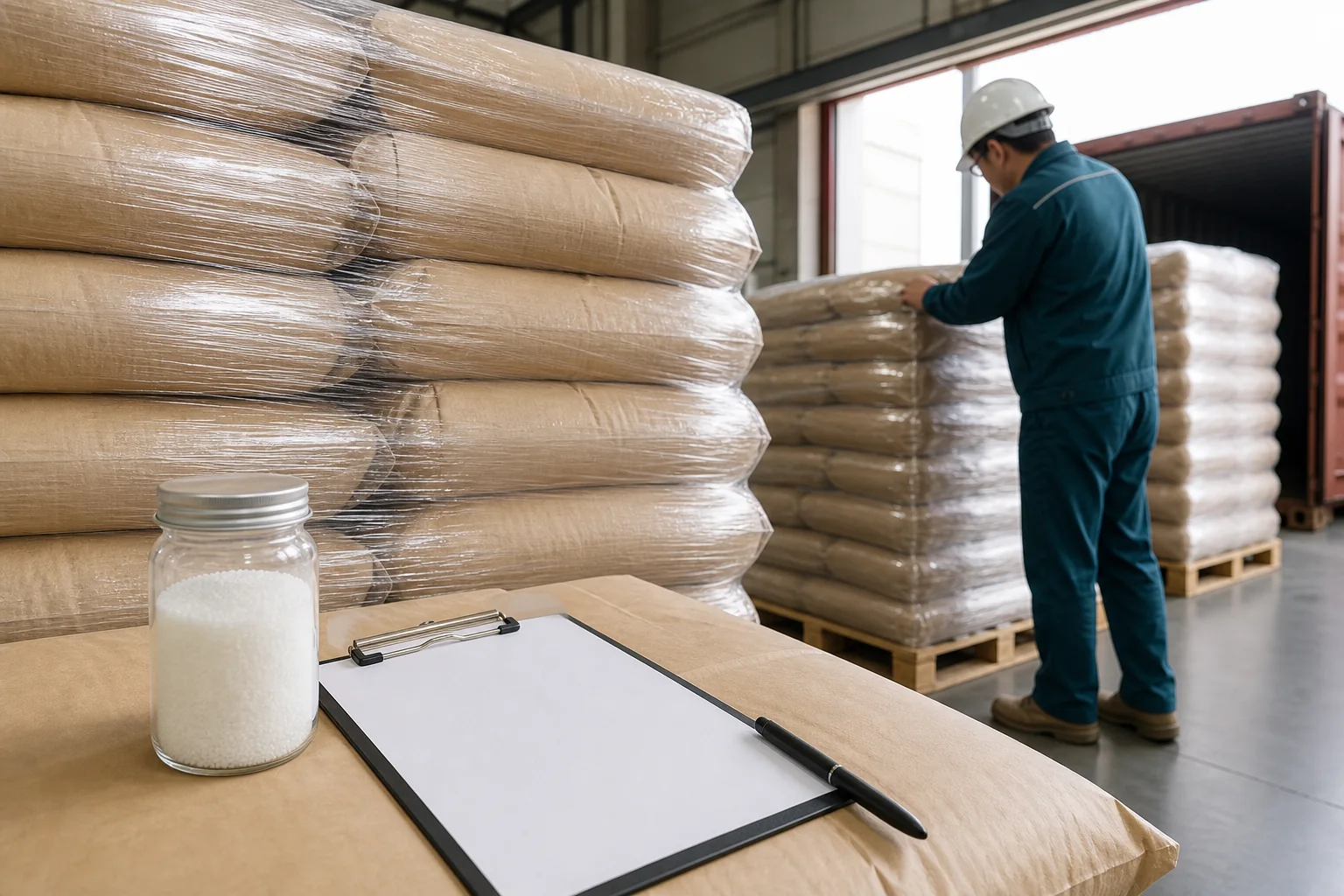
Compare powder handling, emulsion activation and charge selection before requesting a specific Xinqi product code. Confirm the proposed grade, product documents and representative sample availability with technical sales.
Form does not determine the winning chemistry
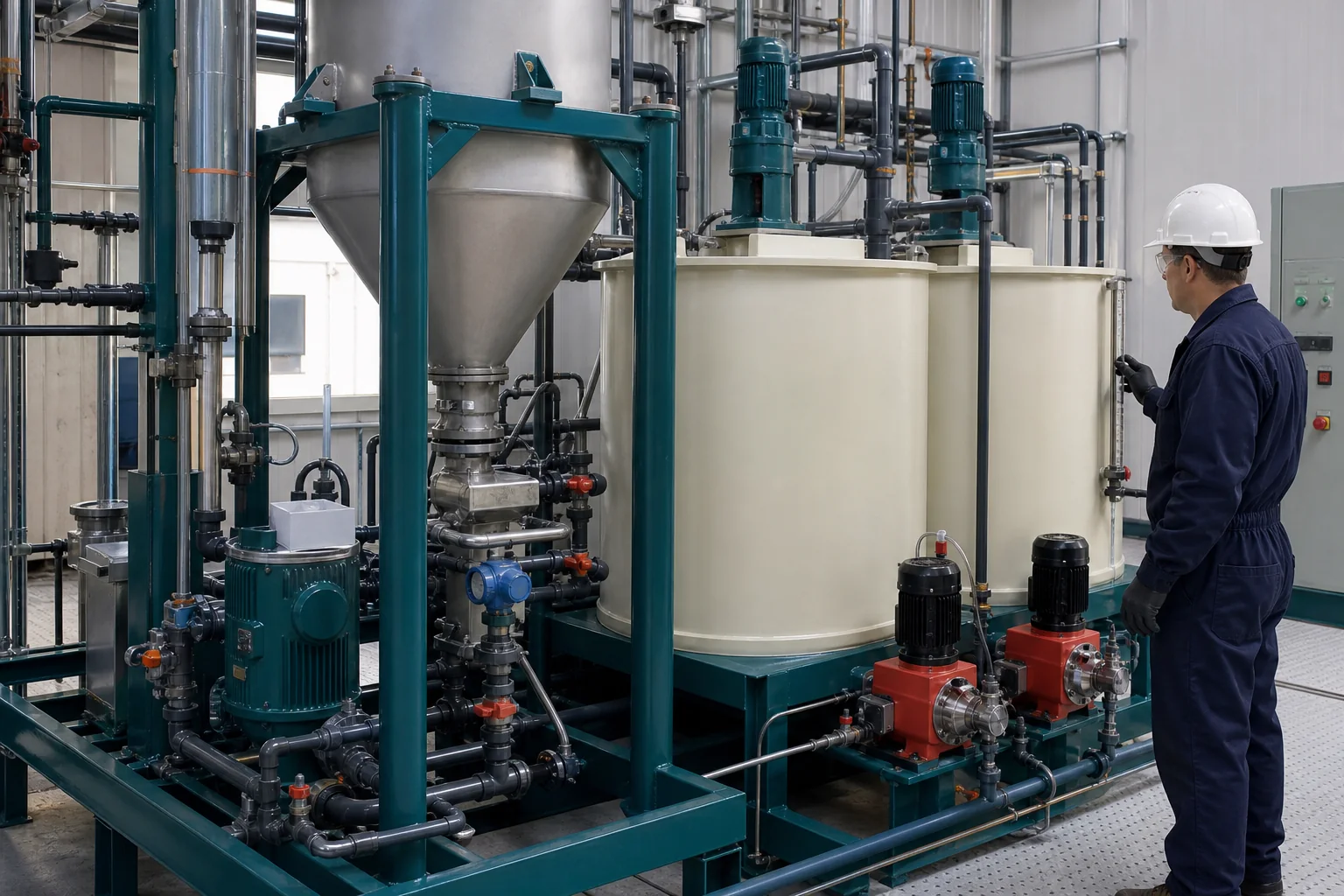
Powder requires dispersion and hydration. Emulsion requires a compatible activation method. Either form can include different ionic and molecular profiles, so replacing one with the other requires more than matching the number printed beside charge density.
Keep preparation capability, measured consumption and separator performance in the same decision. A material that is attractive in a beaker may be impractical if the plant cannot make enough usable solution during peak operation.
Ask for a focused sample set
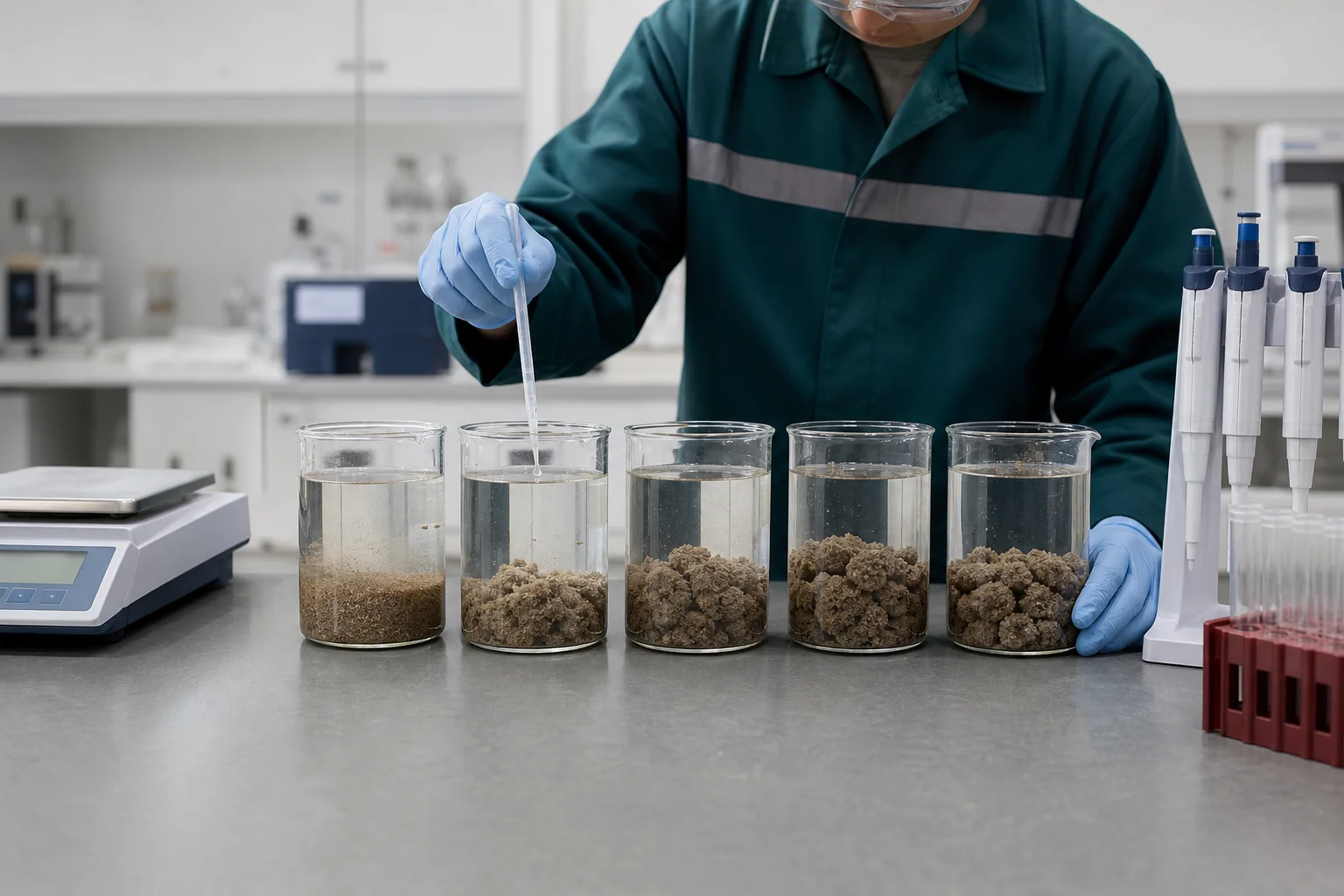
Describe feed origin, dry solids, biological or chemical treatment, pH, conductivity, equipment and current treatment. Ask how the proposed samples differ and what observation would justify advancing each one.
The CPAM purchasing plan connects application approval with the commercial specification. For a different charge family, consult the charge-selection discussion before assuming that increasing cationicity will solve a process fault.