
Do not turn charge into a quality score
Cationic groups influence interaction with the material being conditioned, but charge density is only one product variable. Molecular architecture, chain size, active content and preparation can also affect the result. The highest listed charge is not automatically the best purchase.
Compare charge descriptors only after understanding the supplier’s measurement basis. Avoid matching a percentage between two documents when the methods or meaning of the values differ.
Identify the digestion and blending context
Record sludge sources, digestion process, blend ratio, storage time, dry solids and upstream chemical additions. Keep the sample representative of the material at the polymer addition point. If the plant alternates between different sludge blends, a single sample cannot define the whole purchasing specification.
Preserve fines during sampling and mixing. A container that has separated before aliquots are taken can make later test points appear easier or harder for reasons unrelated to the polymer.
Choose an interpretable screening set
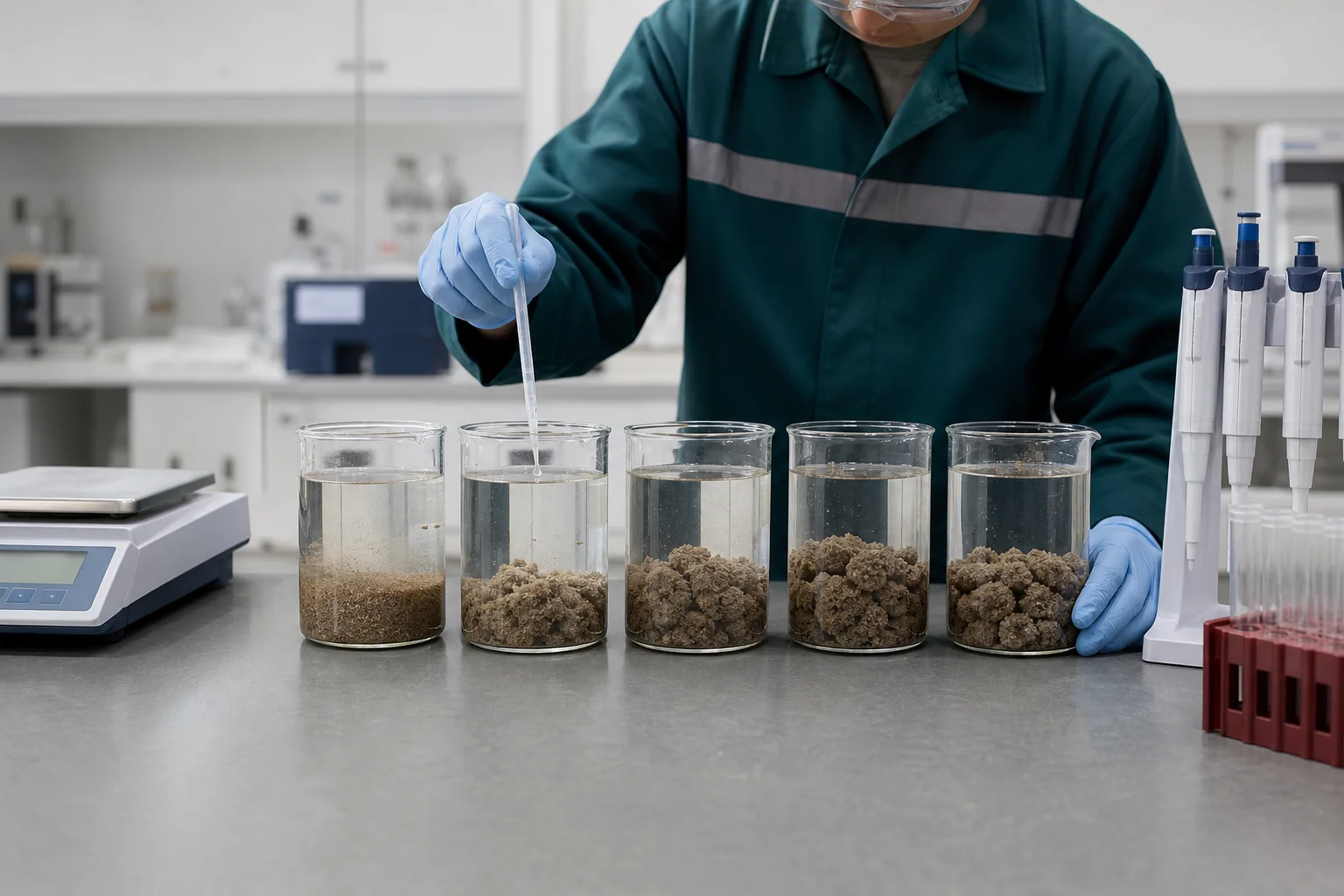
Ask for a few samples with explained differences. Where possible, first compare nearby charge profiles without simultaneously changing every other property. Prepare them under appropriate controlled conditions and use several doses on a stated basis.
Include the incumbent product and repeat promising conditions. Observe whether the response has a useful band or only one sharp visual optimum. An isolated attractive floc does not establish robustness across a shift.
Use research as a reason to test, not a recipe
A published sludge study compared CPAM molecular weight and charge density and reported different dewatering responses. Its findings support considering both variables; they do not establish a universal grade or dosage for another plant. See the study of CPAM characteristics and sludge dewatering.
The transfer decision still requires representative plant sludge, the local preparation method and the installed machine. Laboratory centrifugation or drainage conditions may not reproduce production shear, residence and solids loading.
Connect chemistry to an accepted result
Record return-liquor solids, cake condition and throughput together. If a higher-charge sample changes drainage but worsens release or capture, document the trade-off. Confirm finalists at stable operating conditions before changing the approved product.
Use the charge-selection product route with equipment-specific dewatering criteria. If all samples perform poorly, investigate preparation and the feed before adding still more charge levels.
Related purchase decisions
- High-Charge Cationic Polyacrylamide: Purchase Specification — Qualify high-charge CPAM offers with comparable charge methods, defined sludge, controlled preparation and equipment-specific acceptance.
- CPAM Molecular Weight and Viscosity: Compare Supplier Quotes — Align cationic polymer molecular and viscosity descriptions with stated test conditions, preparation capacity and measured separator response.
- CPAM for Digested-Sludge Centrifuges: Prepare a Trial RFQ — Request centrifuge polymer trials with digested-sludge identity, dry-solids load, centrate, cake, preparation and stable machine settings.
- CPAM for Food-Processing DAF: Specify a Flotation Trial — Buy cationic polymer for food-process flotation using batch identity, fats and solids, coagulant controls, float stability and treated-water targets.
- CPAM for Slaughterhouse Sludge: Build a Representative RFQ — Request cationic polymer trials with slaughterhouse sludge sources, flotation and biological blends, storage, capture and disposal acceptance.
- CPAM for Paper-Mill Biological Sludge: Define Repeat-Supply Limits — Qualify cationic polymer for paper-mill sludge with biological and fiber blends, filler changes, preparation, dewatering and documented grade control.
- CPAM After Ferric Conditioning: Qualify the Sludge Before Buying — Specify cationic polymer trials after ferric treatment with fixed upstream chemistry, defined inorganic and biological solids, capture and cake checks.