
Define what high charge means
Ask whether the supplier reports cationic monomer content, charge density or an internal classification. Confirm method, units and reporting range. Matching percentages from unrelated documents does not establish a common chemical specification.
Separate routine lot-release properties from typical characterization values. A quoted descriptor should not become a guaranteed receiving limit unless both parties agree the meaning and repeatable method.
Describe the sludge at polymer contact
Record sludge sources, digestion, storage age, blend, dry solids, pH, conductivity and upstream coagulants. A sample taken before a conditioning or precipitation step can represent different surfaces from the production feed.
Include recurring difficult conditions. Use a current benchmark sample rather than assuming an old successful digestion campaign defines the present charge requirement.
Separate charge effects from other changes
Request a focused set with explained differences. Where feasible, compare nearby charge profiles within a similar molecular range before changing architecture, product form and preparation simultaneously.
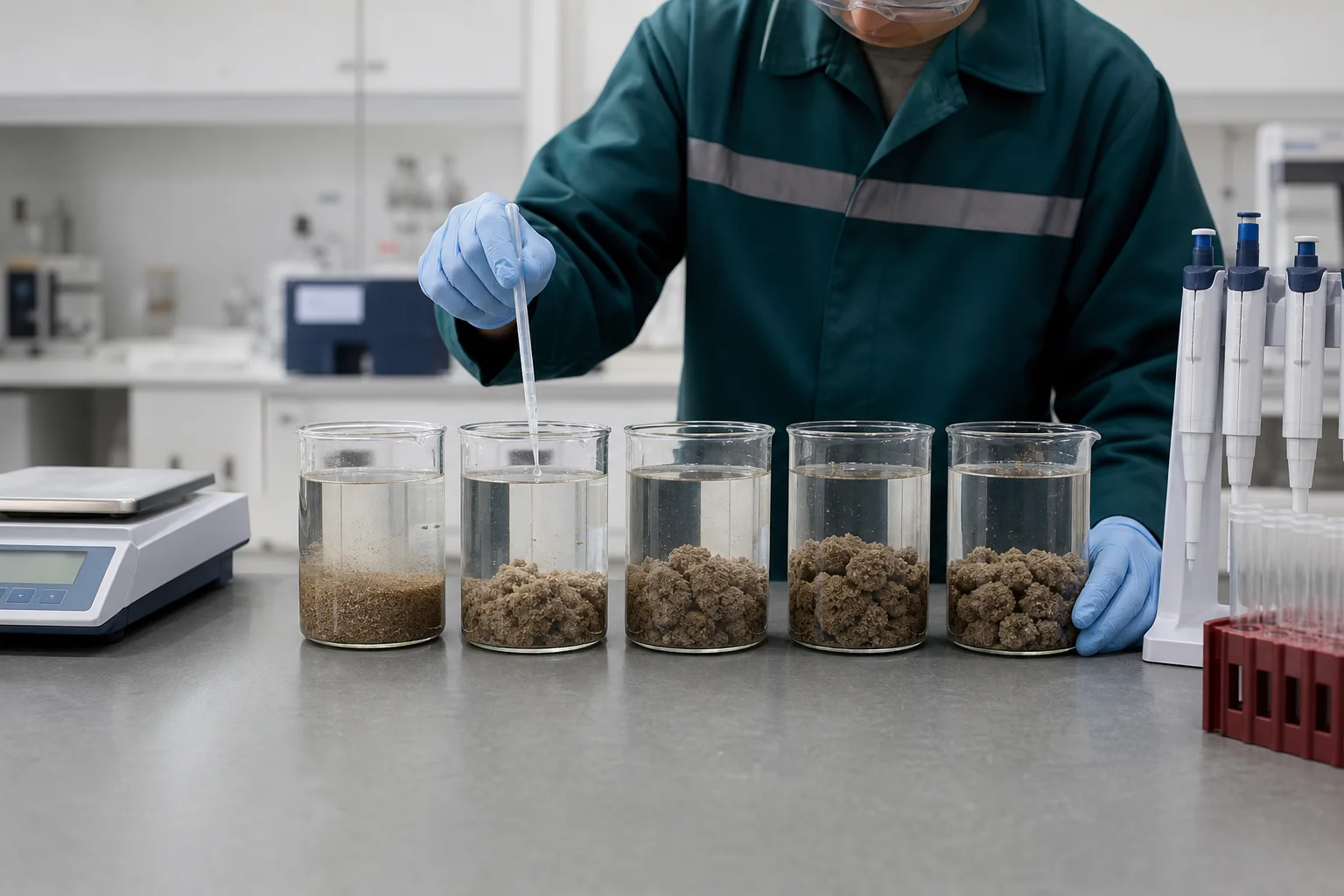
Prepare each code appropriately, normalize dose on a documented basis and include a deliberate high point. Record capture, drainage, cake and release rather than selecting the largest floc. The digested-sludge charge guide sets the technical screening boundary.
Qualify the useful response band
Repeat finalists and include the machine's actual contact and shear conditions in plant qualification. Watch for sticky solids, poor release or deterioration at excess treatment.
If every correctly prepared candidate is weak, investigate sludge identity, dose delivery and equipment. Buying progressively higher charge does not correct a blocked line, inadequate activation or uncontrolled solids-loading change.
Write the order around the accepted code
Record supplier code, agreed charge definition, molecular characterization where relevant, preparation method, feed envelope and operating acceptance. Preserve the original TDS and the approved trial sheet together.
Use the high-charge CPAM sample request to resolve remaining definitions before a purchase order is issued. Require review of any substituted code or changed analytical method instead of accepting another bag solely because it is described as high charge.
A specification review before the sample order
Place each proposed code beside its charge definition, analytical method, claimed range and whether the figure is typical or guaranteed. Add commercial form, declared active basis and preparation instructions in separate columns. Leave unresolved fields marked for supplier clarification rather than filling them with assumed equivalence.
Record the question each sample answers: for example, whether a neighboring charge profile broadens the accepted dose band at the same sludge blend. State what would reject it, such as unacceptable return-liquor solids or release. This prevents a purchase specification from preserving an impressive percentage while losing the operating reason for selecting the product.