
Document the ferric duty
Record where ferric is added, its purpose, actual dose and concentration, pH conditions and residence. Identify biological, precipitated and primary solids in the final blend.
Do not assume that a chemical name determines the right polymer family. The feed at polymer contact, not the original untreated wastewater, sets the comparison.
Stabilize upstream chemistry first
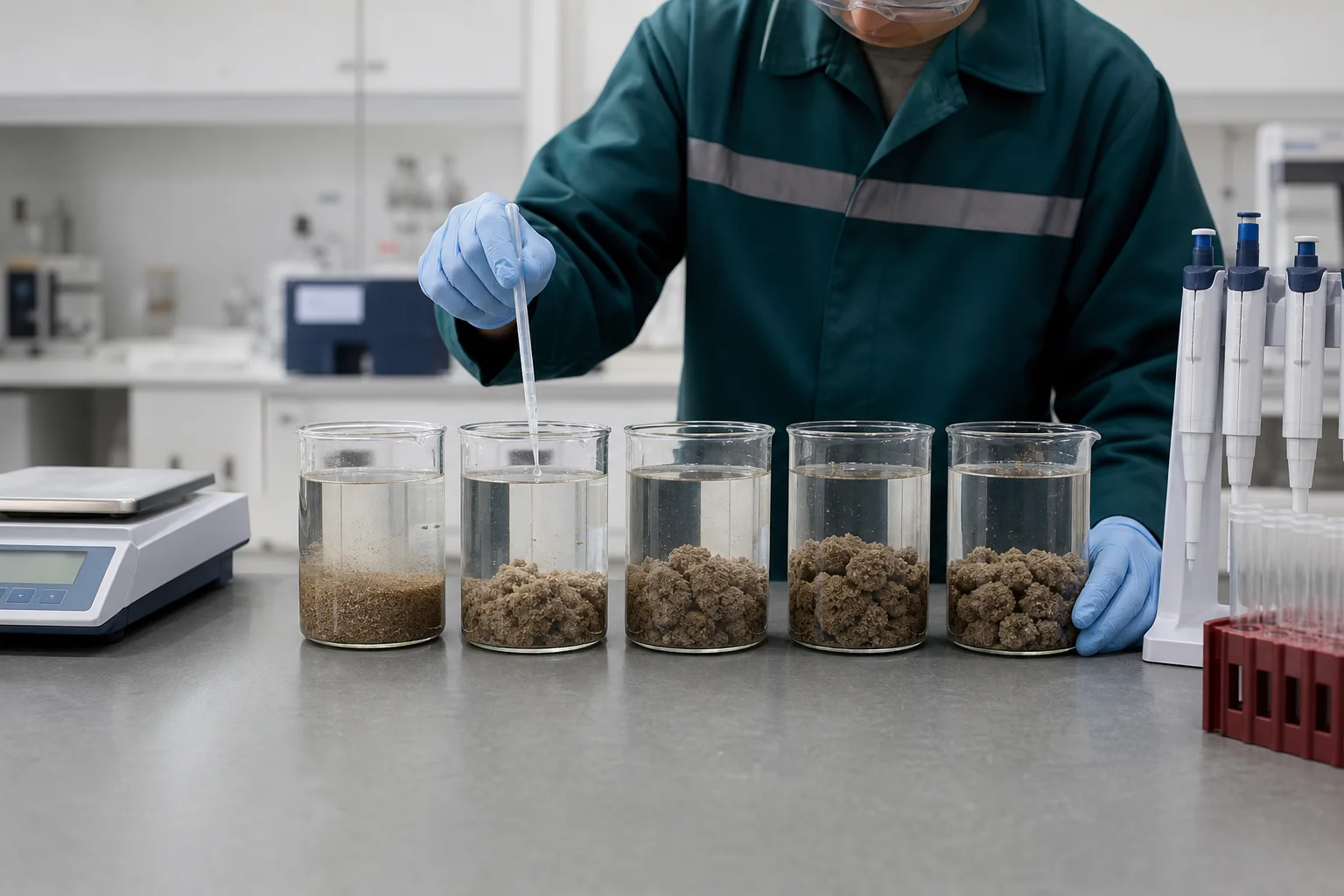
Establish a representative treatment condition before the initial polymer screen. Keep ferric, pH adjustment and relevant blending fixed while comparing CPAM candidates.
If the purchase objective includes changing both programs, stage the trial so each effect can be evaluated. Otherwise a better cake can be attributed incorrectly to polymer when the solids composition also changed.
Rebuild the charge and dose record
Prepare named candidates and an incumbent control consistently, using a documented commercial or active basis. Request explained differences in charge and molecular profile.
Screen a useful dose band on current sludge and repeat promising points. The charge-selection framework discourages treating the highest charge descriptor as automatic superiority.
Measure the effect on the whole dewatering route
Pair return-liquor solids with cake dry solids, release and dry-solids throughput. Include any preparation, cleaning or disposal effects that materially change the commercial result.
If all polymers perform weakly, verify feed preparation, chemical delivery and equipment. Increasing polymer dose without resolving upstream precipitation or loading variation can hide the cause rather than qualify a better product.
Write the qualified chemistry boundary
Record the ferric program, sludge range, approved CPAM code, preparation and accepted operating window. Include a requalification trigger when ferric use or blend changes materially.
Send the current chemical sequence and measured target through the ferric-conditioned sludge CPAM enquiry. Ask suppliers to state which assumptions remain untested before a repeat-supply quotation is accepted.
An upstream-change qualification record
Use distinct records for the accepted ferric program and any proposed alternative, including dose basis, addition point, pH condition, residence and sludge blend. Compare CPAM within a stable upstream state before drawing conclusions across the two programs. Keep sampling at the real polymer-contact condition.
Document whether a changed cake result reflects a different solids composition, a different polymer profile or an unresolved combination. If both variables changed, plan a controlled confirmation rather than assigning the whole improvement to the new CPAM. The purchasing approval should retain the relevant ferric and sludge boundary so future operators know when the original qualification no longer applies.