
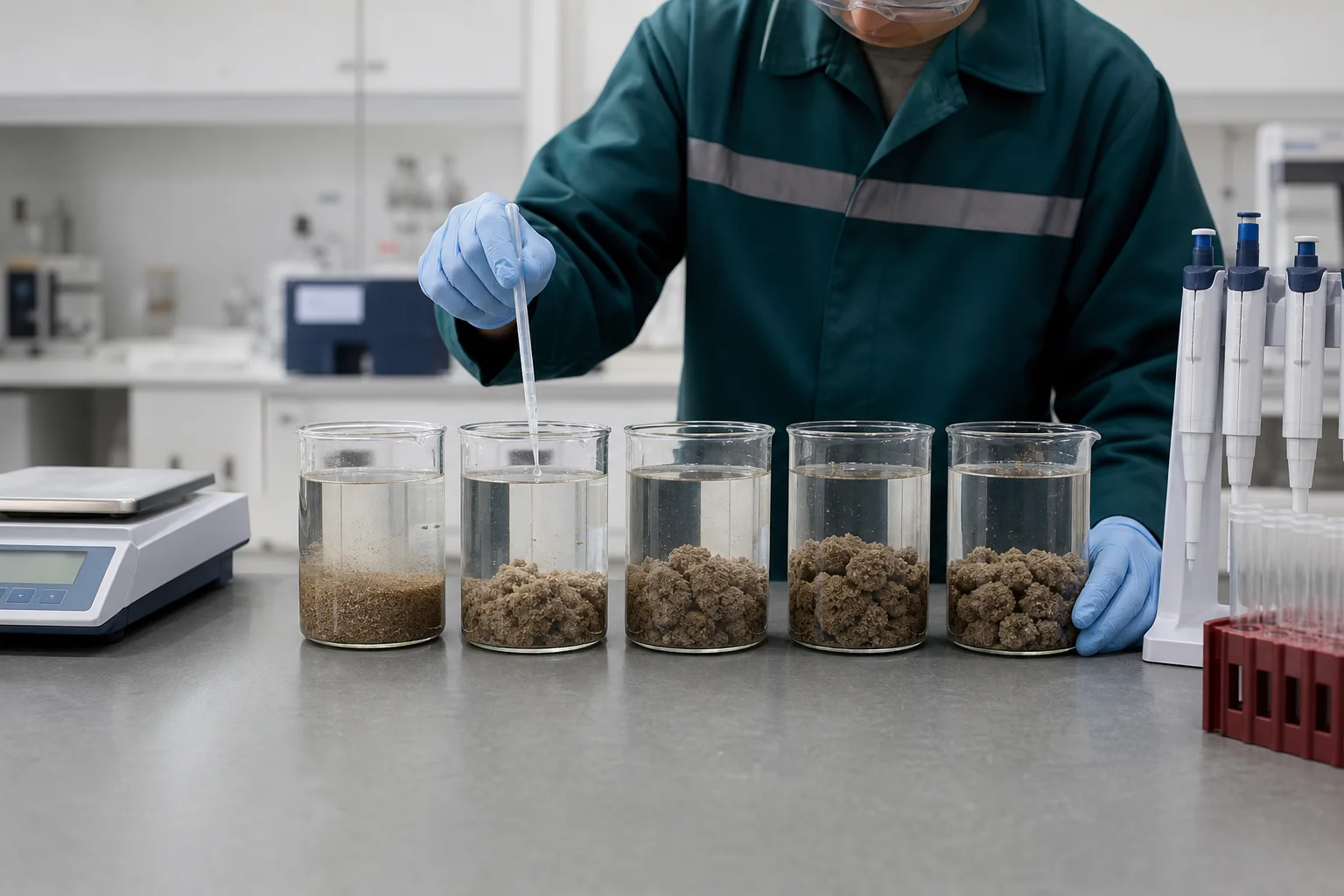
Name the decision and the benchmark
State whether the trial concerns cost at equivalent capture, cake handling, preparation capacity, difficult feed or supply continuity. Separate mandatory limits from optional improvements.
Record the current grade, preparation, consumption, feed and equipment state. Without a measured benchmark, an apparent improvement may reflect ordinary process variation rather than a better purchase.
Size the material against the process
Estimate commercial consumption from measured demand and the intended observation period. Include justified transition, startup and repeat checks, while keeping storage and supplier use-period instructions practical.
Allow sufficient separator or recycle residence before sampling. A universal sample mass does not establish the quantity required by a belt press, centrifuge, DAF or batch process.
Control transition and rollback
Preserve usable benchmark stock and label product and prepared-solution identity. Avoid an unknown mixture of old and trial material that prevents attribution of the result.
Calibrate the delivery system and verify preparation before starting. Identify who can stop a failing comparison and how the plant returns to the accepted condition.
Use a pre-agreed measurement sheet
Specify sample points, timing, methods and responsibilities. Pair capture with cake or flotation performance, throughput, consumption and handling according to the duty.
The dry-tonne method supports dewatering comparisons. Keep raw observations, unfavorable points and relevant operating changes rather than retaining only the selected best result.
Close the commercial handover
Confirm freight, packaging, documents, trial charges if applicable and whether a successful trial needs a new bulk quotation. Agree how unused stock or an unsuccessful comparison will be handled.
Send the written plan through the CPAM trial-shipment request. Release repeat supply only against the exact qualified code, preparation and feed envelope; supplier confidence alone does not replace the evidence agreed before dispatch.
A pre-dispatch trial authorization
Record intended operating intervals, estimated commercial demand, transition allowance, sample timing and retained benchmark stock before material is dispatched. Name the plant owner, supplier contact and stop criteria. A trial that requires an equipment change should include that approval rather than assuming it is an ordinary chemical substitution.
Keep the final outcome in three possible categories: accepted within the stated envelope, rejected against a named criterion, or inconclusive because conditions were not controlled. An inconclusive run needs a defined repeat, not an automatic bulk order or a claim that the product failed everywhere. Attach the decision and raw results to the commercial handover.