
Define the digested feed
Record digestion process, sludge sources and blend, storage age, dry solids, pH, conductivity and relevant upstream changes. Include known difficult operating periods.
Preserve fines and use consistent sample handling. A settled transport container can misrepresent the fraction controlling centrate solids. Do not compare suppliers on sludge collected under unrelated conditions without acknowledging the limitation.
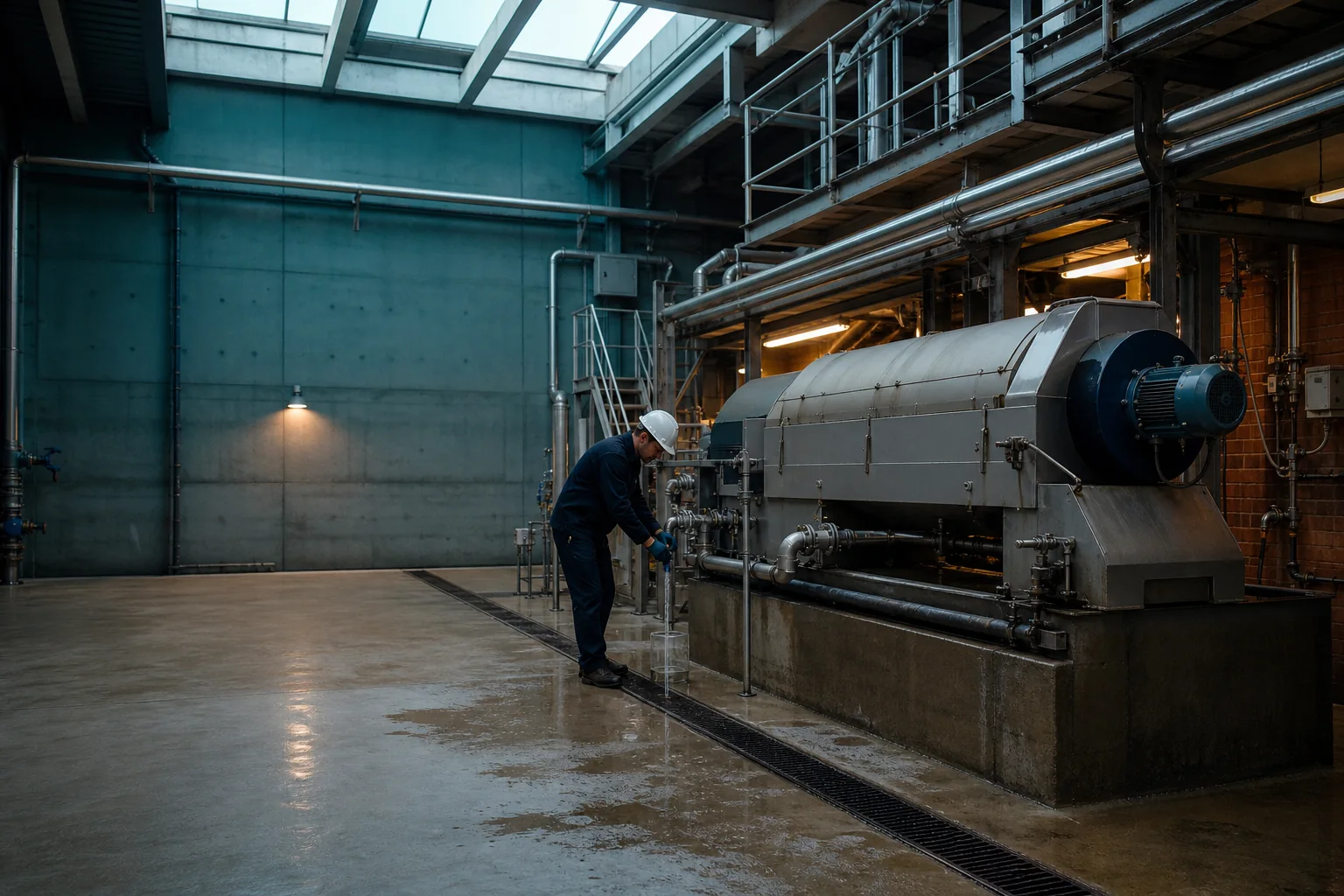
Describe the actual centrifuge trial
Provide machine type, approved operating settings, feed range, polymer addition point and transfer path. Obtain operating limits and adjustment procedures from the equipment owner or manufacturer.
Keep those settings stable during the initial chemical comparison. Do not interpret a simultaneous machine adjustment and product change as proof that the polymer alone produced an improvement.
Choose an interpretable candidate set
Ask why each charge and molecular profile belongs in the screen. Prepare the incumbent and alternatives appropriately and compare several doses on an aligned mass basis.
The digested-sludge screening guide explains the first-stage chemistry. Bench work narrows the set; full-scale contact, shear and solids loading still require confirmation.
Agree paired acceptance measurements
Measure centrate solids, cake dry solids and dry-solids throughput with synchronized sampling. Include polymer consumption, handling and relevant machine observations over a defensible operating period.
A cake-solids increase is not an accepted gain if capture falls outside the plant's limit. Record uncertainty and repeat finalists before turning one favorable sample into a purchase specification.
Set trial quantity and release conditions
Estimate material from calibrated commercial consumption, planned throughput, transition and repeat checks. Retain enough benchmark product for rollback and identify who can stop the comparison.
Send the machine and sludge record through the centrifuge CPAM enquiry. The resulting order should name the qualified code, preparation and feed envelope, not a universal high-charge or high-molecular-weight promise.
A synchronized centrifuge evidence record
Record feed flow and dry solids together with neat-product or stock concentration, calibrated delivery and the sampling interval. Pair centrate and cake samples with that operating interval, allowing for the plant's known transport and residence. Include machine settings as observations under the approved procedure, not as generic adjustment advice.
Repeat a stable benchmark interval and a stable candidate interval before calculating a saving. Log feed blend, digestion or storage changes between them. If the difference coincides with an uncontrolled process change, mark the comparison inconclusive and schedule a controlled repeat rather than using the better sample as the sole reason for a bulk order.