
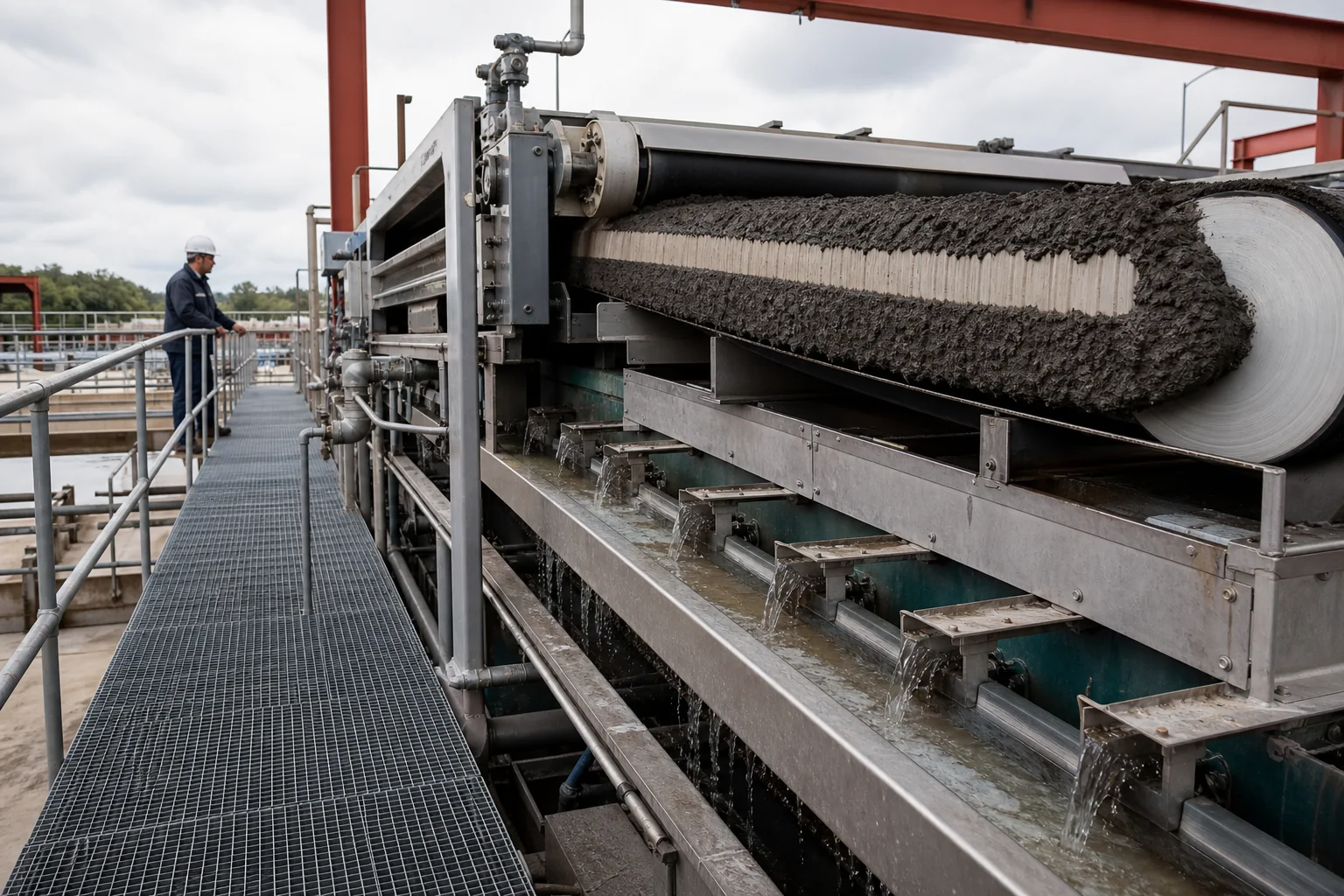
Separate sludge treatment from paper production
State whether the enquiry concerns biological sludge, primary fiber solids, mixed dewatering feed or another defined waste stream. Name the relevant separator and polymer addition point.
Do not use a wastewater approval to infer suitability in the sheet-making process. Product quality and any application-specific documentation for wet-end use require their own qualification.
Record furnish-related variation in the sludge
Describe normal fiber and filler changes, broke or grade transitions, upstream coagulants, biological contribution, storage and dry solids. Include pH, conductivity and relevant process additives.
Collect representative normal and difficult blends. A sample rich in easily drained fibers can misstate the conditioning requirement of a more biological or fine-rich feed later in the campaign.
Compare repeatable stock and dose
Prepare named candidates and the incumbent using appropriate procedures and controlled age. Keep active and commercial mass bases distinct. Screen enough points to see underconditioning and excess treatment.
Record drainage or settling only as part of the evidence. Confirm the machine's capture, cake, release and throughput. A shift in blend or separator loading must remain visible in the trial sheet.
Protect the treatment plant return
Follow filtrate or centrate solids and relevant return-liquor constraints alongside cake dry solids. Lower wet-cake haulage cannot be treated as a complete saving if solids are simply returned upstream.
Use the dose-per-dry-tonne method for synchronized loading and consumption. Repeat a promising condition before converting a single grade-transition observation into an annual supply claim.
Bound repeat orders
Keep supplier code, qualified sludge blend range, preparation method, accepted dose band and receiving checks with purchasing. Define a review trigger for major furnish, filler or treatment changes.
Use the paper-mill sludge CPAM request with both process and demand records. Keep this order separate from a paper-process retention enquiry so similar chemical names do not erase different application and documentation requirements.
A campaign-change supply record
Track furnish or grade transitions, primary-fiber contribution, biological blend and relevant upstream chemicals alongside the dewatering result. Identify which normal campaigns the proposed CPAM has actually covered. A fast-draining fiber-rich feed should not silently stand in for a fine-rich biological blend during supplier approval.
Keep repeat-order release linked to that campaign range and the prepared-stock procedure. When a major filler or treatment change occurs, compare the retained benchmark and current product on the same new feed before blaming a shipment. Record whether the grade remains suitable or needs requalification, without extending a sludge decision into claims about wet-end retention or finished paper quality.