
Name each sludge contribution
Identify upstream separation, DAF, biological treatment, blend proportions, storage and dry solids. Include relevant production or cleaning changes and the pH, temperature and conductivity record.
Do not infer polymer demand from raw wastewater alone. The solids and chemical history at dewatering contact may differ markedly from the incoming stream.
Preserve the difficult operating condition
Take representative samples at the actual addition point, retaining fines and documenting age. If blends vary regularly, collect the important conditions separately.
Use the same handling method for the benchmark and candidate tests. A poorly mixed transport sample can create false differences in drainage or capture that have nothing to do with charge selection.
Plan the candidate comparison
Ask suppliers to explain proposed charge and molecular profiles. Keep stock concentration, maturation, activation and dose basis documented. Include the incumbent and multiple doses rather than comparing one arbitrary setting.
The charge-profile screening principles are useful beyond digestion, but the slaughterhouse feed must still establish its own accepted range. Higher cationicity is not an automatic answer to every fatty or biological blend.
Measure disposal and return streams
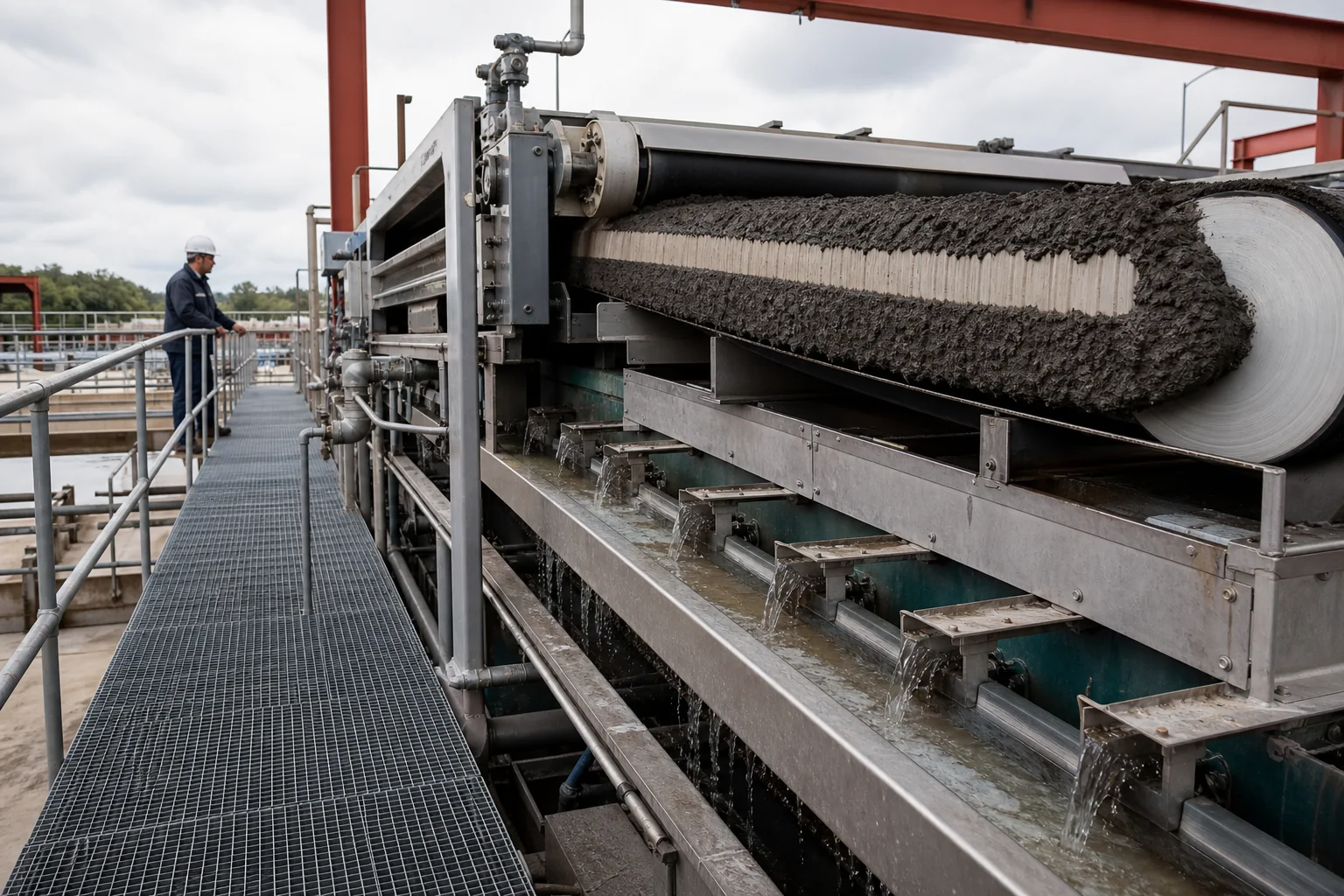
Record filtrate or centrate quality, cake solids, release, throughput and handling. Pair cake measurements with capture so a drier result does not hide increased solids loss.
Keep equipment settings stable during the first chemical comparison and use approved machine procedures. Record any added cleaning or operator work that changes the commercial value.
Turn the evidence into a quotation
Specify trial material, expected commercial consumption, packaging, destination and receiving checks. A proposed supply grade should be tied to the approved blend and preparation, not simply labelled slaughterhouse polymer.
Send the sludge identity and measured baseline through the slaughterhouse CPAM enquiry. Require review when upstream conditioning or blend changes outside the qualified envelope; neither industry familiarity nor a successful jar establishes unrestricted repeat-supply performance.
A sample identity packet for the supplier
Label every sample with stream, date, approximate age, measured dry solids and the normal blend contribution. Include the upstream conditioning codes and current separator result. Distinguish a deliberately difficult production condition from accidental sample contamination or a container that lost its fine fraction during handling.
Attach a short acceptance sheet stating capture, cake or float handling, throughput and which failures are unacceptable. Ask the supplier to explain the proposed samples against those fields. If no current plant baseline is available, obtain it before interpreting a lower laboratory dose as a commercial saving; an unmeasured incumbent is not a defensible cost comparison.