
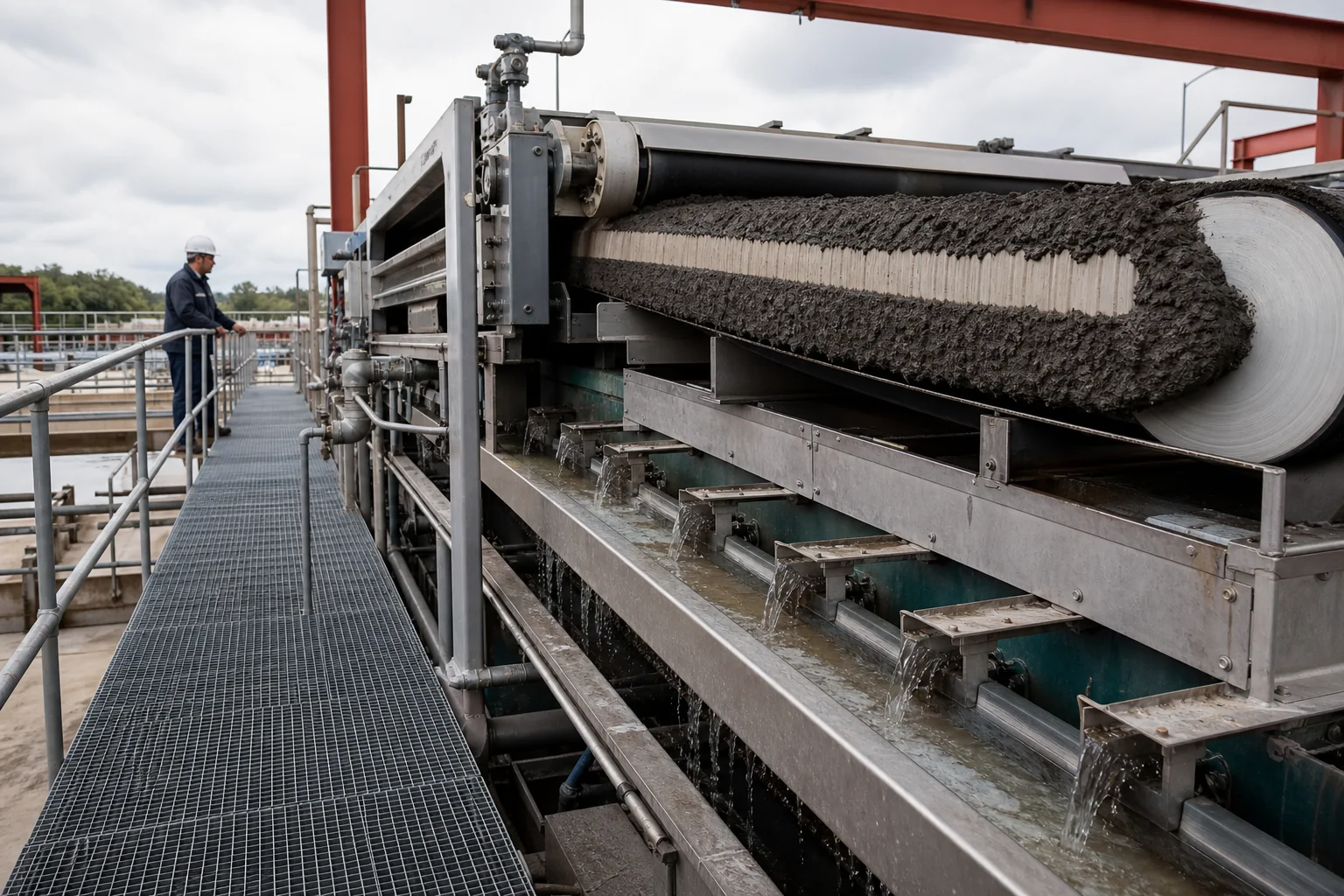
Identify feed and belt conditions
Record waste-activated, primary or mixed sludge, blend ratio, storage age and dry solids. Include pH, conductivity and upstream chemicals that may affect conditioning.
Provide belt type, normal throughput, drainage section, wash condition and relevant equipment settings. Use the manufacturer's approved operating envelope rather than a generic mechanical adjustment copied from another press.
Observe drainage without losing capture
Compare controlled polymer preparations on representative sludge. Record drainage development over time and the quality of the drained water, not just the volume released.
An apparently fast drainage result can conceal solids loss. Keep an incumbent control and examine a useful dose band including insufficient and excessive treatment so the acceptance range is visible.
Check distribution and side losses
At plant scale, inspect how conditioned sludge spreads across the belt and behaves as compression begins. Record side leakage, squeeze-out, return-liquor solids and any cleaning requirement.
Maintain consistent feed and machine settings during the first comparison. Changes in loading or belt condition can mimic a product difference. Keep delivery calibration and stock age in the same record.
Measure release and disposal consequences
Record cake dry solids, discharge, sticking and operator intervention together with throughput. A drier cake requiring more manual cleaning may not deliver the expected value.
Use the wet-cake diagnostic sequence when bench and press performance disagree. First separate preparation, dose loading and equipment state from a genuine polymer-profile mismatch.
Approve a belt-specific purchase
Agree mandatory capture and handling limits, useful dose range, observation timing and rollback. Estimate trial material from actual as-supplied demand, not solution pump volume alone.
Send the complete belt record through the belt-press CPAM sample request. Preserve the exact qualified code and preparation method in the order; approval on a centrifuge or another press does not establish interchangeability at this duty.
A belt-route observation sheet
Use separate observations for free-drainage water, later filtrate, cake discharge and belt-cleaning demand. At each accepted dose, record distribution, side losses and any operator intervention as well as measured solids. Keep the same sampling and cake-compositing practice throughout the comparison.
Time the relevant production period rather than photographing only the cleanest drainage point. If the candidate needs a changed belt setting, conduct that adjustment under the equipment procedure and record it as a separate stage. Purchasing can then distinguish a chemical improvement from a combined operating change and understand what must be preserved when repeat material arrives.