
Confirm the symptom with paired measurements
Compare cake dry solids with filtrate or centrate quality and throughput. Note when the change began, whether it affects every run and what changed upstream. A wetter cake with clean liquor is a different problem from a wetter cake accompanied by high solids loss.
Use equivalent sampling points and timing. Surface moisture, inconsistent cake sampling and a brief process transition can create an apparent trend that is not representative of normal operation.
Check solids loading before polymer strength
Review feed flow and measured dry solids. A constant pump setting does not mean a constant dose per dry tonne. Confirm whether a changed blend, digestion condition or storage period coincides with the failure.
Calculate current consumption using the dry-tonne dose method. Compare it with the approved operating record rather than a remembered nominal setting.
Verify that usable polymer reaches the sludge
Inspect actual powder or emulsion consumption, preparation water, stock concentration, maturation time and tank turnover. Check for gel, blocked strainers, air in dosing lines and inconsistent flow. Do not assume that a running pump proves correct delivery.
Take a prepared-solution sample at a meaningful location and age. Compare a fresh correctly prepared batch with the production stock on the same sludge before blaming the commercial product. Follow the relevant SDS and equipment procedure when inspecting or cleaning the system.
Review the separator condition
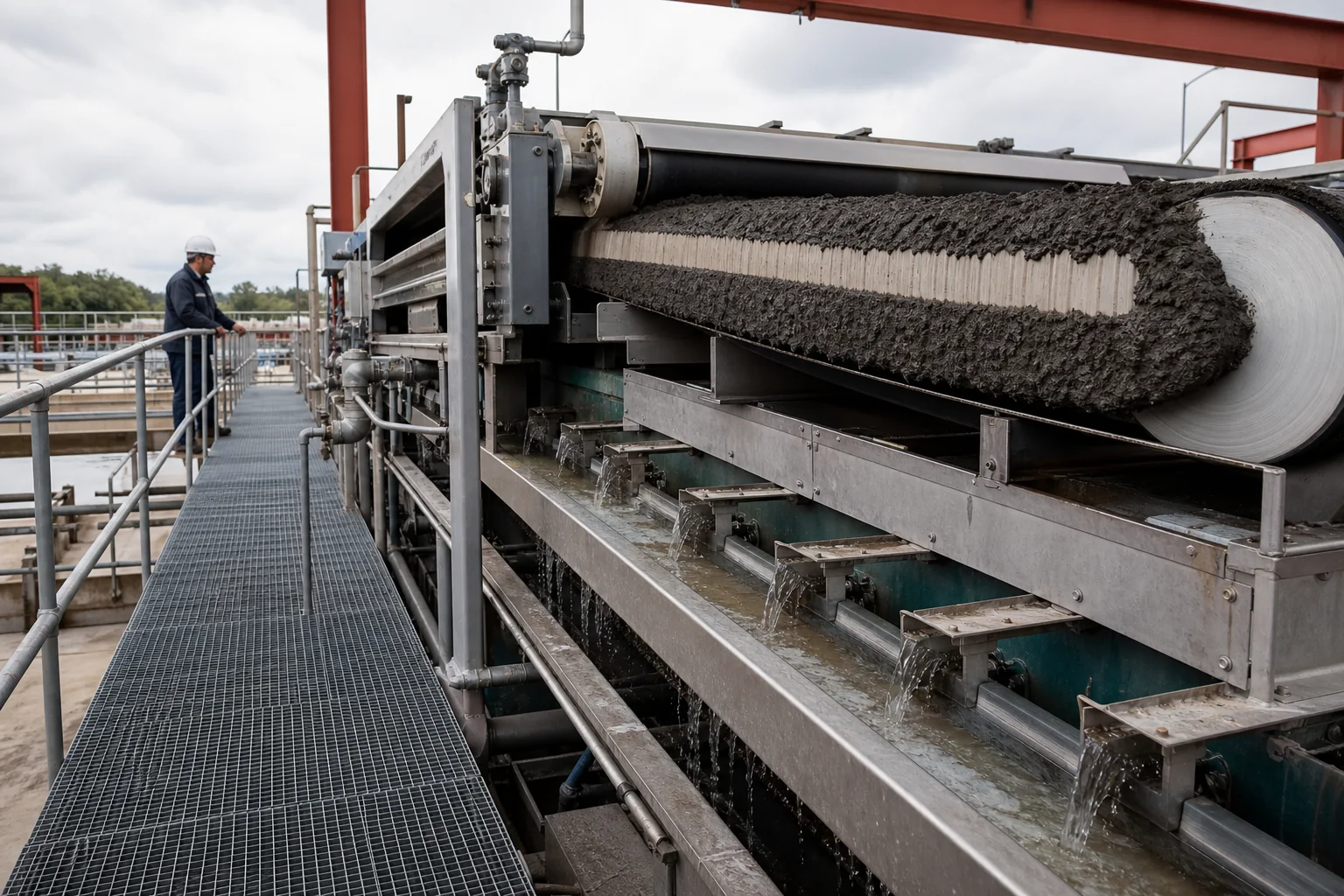
Inspect the operating variables appropriate to the installed machine. Belt systems require attention to drainage and distribution; centrifuges to feed and recorded machine settings; screw presses to loading and discharge behavior. Use manufacturer instructions rather than generic mechanical adjustments.
Hold mechanical conditions steady during the first chemical comparison. If both machine settings and polymer are changed together, it may be impossible to explain why the result improved or worsened.
Reopen the grade screen only with evidence
When delivery is sound and current sludge differs from the approved condition, screen a focused set of charge or molecular profiles. Include the incumbent and several doses. Record drainage, capture, cake and the effects of excess treatment.
Advance one controlled change at a time. The charge-density trial and solution-aging check address two common sources of confusion. Keep the failed condition in the record so future shifts can recognize it.
Related purchase decisions
- CPAM for Belt Presses: Buy Against Drainage, Capture and Release — Qualify cationic polymer for activated-sludge belt pressing with free drainage, side losses, filtrate, cake release and repeatable plant consumption.
- CPAM for Screw Presses: Qualify Mixed-Sludge Supply — Specify screw-press polymer trials using sludge blend changes, loading, filtrate solids, cake handling and prepared-solution continuity.
- CPAM for Industrial Sludge Filter Presses: Buying Checklist — Compare cationic polymer offers for industrial biological sludge filtration against filtrate, cake, cycle time and media handling.
- CPAM for Dairy DAF Float: Buy for the Second Dewatering Duty — Qualify cationic polymer for dairy flotation sludge separately from the DAF program using actual float age, composition, filtrate and cake handling.